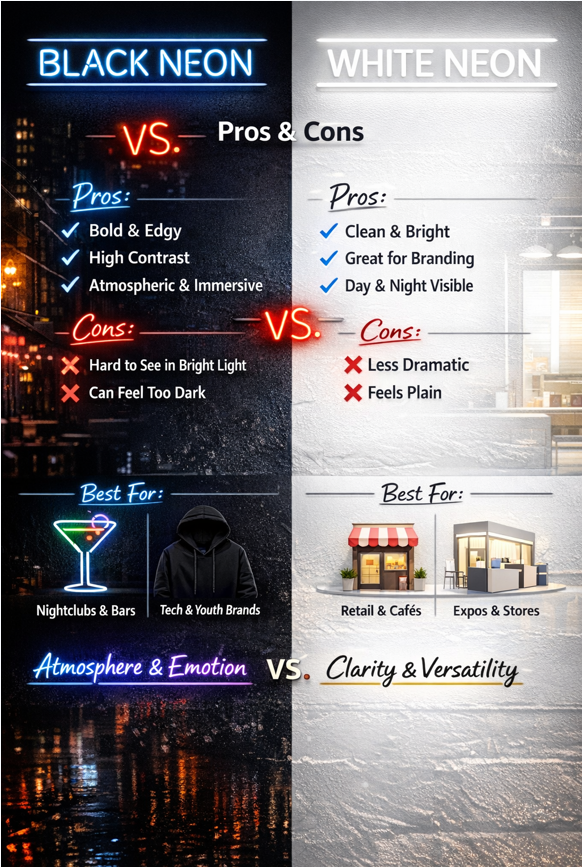
Black Neon vs White Neon: Pros & Cons
Pros:
Strong contrast, very eye-catching (especially in dark environments)
Feels more premium, edgy, and futuristic
Colors appear more vivid and saturated
Creates a strong atmosphere and immersive experience
Cons:
Less visible in bright environments (poor daytime performance)
Can feel heavy or “too dark” if not designed well
Details may be harder to see from a distance
Pros:
Clean, minimal, and modern look
Works well both day and night
Better for brand visibility (logos are clearer)
Makes spaces feel brighter and more open
Cons:
Less dramatic or “wow” effect
Can feel plain if contrast is low
Lighting effect is less striking than on dark backgrounds
| Scenario | Black Neon | White Neon |
|---|---|---|
| Nightclubs / Bars | ✅ | ❌ |
| Streetwear / Youth Culture | ✅ | ⚠️ |
| Tech Brands | ✅ (futuristic) | ✅ (minimal) |
| Retail Stores | ⚠️ | ✅ |
| Cafés / Dessert Shops | ⚠️ | ✅ |
| Exhibitions / Branding | ⚠️ | ✅ |
Summary:
Black neon = emotion & atmosphere-driven
White neon = clarity & brand communication
Shows dust and scratches more easily
Highly dependent on lighting conditions
Requires better overall space design
More versatile across environments
More forgiving in design execution
Better for long-term commercial use
Higher design requirements (otherwise may look cheap)
Often used in experience-driven spaces → higher overall cost
Easier to standardize and mass-produce
More cost-efficient and easier to implement
Black Neon: More striking, emotional, and immersive—but environment-dependent
White Neon: More practical, clear, and versatile—but less visually intense